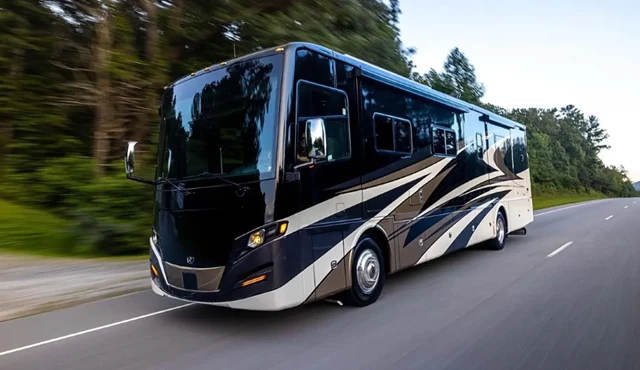
You just walked off the dealership lot having purchased a stunning 45-foot Diesel Pusher motorhome. Before you hand over the check, you ask the salesman, “Do I need a commercial driver’s license to drive this beast?”
The salesman shakes his head and says, “Nope! It’s for personal use. Your regular driver’s license is completely fine.”
The salesman is likely wrong, and taking his advice could ruin you financially.
One of the most dangerous myths in the automotive and recreational vehicle world is that vehicle weight limits only apply to commercial truckers. While it is true that you do not need a Commercial Driver’s License (CDL) if you aren’t hauling freight for profit, many states require a specialized Non-Commercial heavy vehicle license.
If you get into a collision driving a 32,000-pound RV on a standard passenger car license, the police will ticket you for driving without the proper license class. Worse, your insurance provider will use this technicality to void your policy, leaving you personally liable for hundreds of thousands of dollars in damages.
Depending on your home state and the weight of your rig, you need to navigate the confusing bureaucratic process of upgrading your license. In this 2026 guide, we will break down the weight limits, explain the difference between the classes, and show you exactly how to get a non cdl class c license, Class B, or Class A without falling into the commercial DMV traps.
The “Commerce” Rule vs. The “Weight” Rule
To understand what license you need, you have to separate two concepts:
- Commerce (Business): If you are making money (hauling freight, transporting paying passengers, landscaping), you need a CDL.
- Weight (Safety): If you are driving for personal use (an RV, hauling your own horses to a non-profit show), but the vehicle is massively heavy, you need a Non-CDL Exempt License.
The government knows that an 80-year-old retiree driving a 40,000-pound motorhome with air brakes poses a significant safety risk. They want to test your ability to stop that vehicle, even if you aren’t getting paid to drive it.
The Non-CDL Classifications Explained
Most Americans possess a standard driver’s license. In 90% of the country, this is known as a Class C (or Class D in a few states). But when your toys get bigger, your letters change.
The Non-CDL Class A (Heavy Towing)
- The Federal Rule: You are driving a combination of vehicles with a Gross Combination Weight Rating (GCWR) over 26,000 lbs, AND the trailer you are towing weighs more than 10,000 lbs.
- Who Needs It: People driving heavy-duty dually pickup trucks (like a Ford F-450) pulling massive fifth-wheel toy haulers or heavy multi-horse trailers.
The Non-CDL Class B (Heavy Single Vehicles)
- The Federal Rule: You are driving a single vehicle with a Gross Vehicle Weight Rating (GVWR) of 26,001 lbs or more. You are either not towing a trailer, or the trailer is incredibly light (under 10,000 lbs).
- Who Needs It: Owners of large Class A motorhomes (Diesel Pushers), customized converted buses (Skoolies), or large personal moving trucks.
The Non-CDL Class C (The Bureaucratic Oddity)
This is where the most confusion lies. In states like California or Texas, Class C is just a normal car. But in places like Illinois, the DMV has created a very specific middle ground.
Many drivers search for how to get a non cdl class c license because they own a vehicle that is heavy, but not quite heavy enough to trigger the 26,001-pound federal limit.
- The Illinois Example: In Illinois, if you are driving a vehicle for personal use with a GVWR between 16,001 lbs and 26,000 lbs, you cannot use a standard Class D license. You must hold an Illinois Non-CDL Class C.
- Who Needs It: Anyone renting a massive 26-foot U-Haul truck for a cross-country move, or families driving mid-sized Class C or Super-C RVs.
State-by-State Enforcement
This is strictly a state-level issue. Reciprocity is the golden rule here: If you are legally licensed to drive your RV in your home state, you are legal to drive it through all 50 states.
If your primary residence is in Florida, a standard Class E passenger license legally allows you to drive a 45-foot, 40,000-pound RV.
However, if your primary residence is in Texas, California, Pennsylvania, South Carolina, Nevada, or Illinois, the DMV actively enforces Non-CDL heavy vehicle upgrades.
The Step-by-Step Process: How to Get Your Non-CDL
Whether you are applying for a Class A exempt in Texas or figuring out how to get a non cdl class c license in Illinois, the process is incredibly similar.
Here is the master roadmap to avoid the most common DMV traps in 2026.
Step 1: The Paperwork Trap (Do Not Get a DOT Physical)
When you walk up to the DMV counter and say, “I need a Class B license,” the clerk will likely hand you a commercial CDL packet and ask for your DOT Medical Examiner’s Certificate.
Stop them. You must be extremely clear: “I am applying for a Class B EXEMPT or NON-COMMERCIAL license for a personal recreational vehicle.” If you accidentally fill out the commercial paperwork, the state will require a DOT physical, drug testing, and potentially ELDT school certificates. Non-CDL applicants are universally exempt from federal DOT medical requirements.
Step 2: The Written Knowledge Test
You cannot just take a driving test; you must prove you understand heavy vehicle physics.
- The DMV will have you take a modified version of the Commercial General Knowledge test.
- You will be tested on safe following distances (1 second for every 10 feet of vehicle length), height clearances, and basic heavy-vehicle safety. You do not need to study chapters about cargo securement or logbooks.
Step 3: The Driving Skills Test (Bring Your Own Rig)
Once you pass the written test, you will be issued a learner’s permit. You must then schedule a road test. You must bring a vehicle that matches the license class you are applying for.
- If applying for Class A, bring your truck and your heavy 5th-wheel trailer.
- If you are testing for how to get a non cdl class c license in Illinois, bring a vehicle weighing over 16,000 lbs.
Step 4: The Air Brake Catch
This is the most critical hurdle. If your luxury RV is equipped with air brakes (most Diesel Pushers are), you must take your driving test in a vehicle with air brakes. Before you drive onto the street, the examiner will require you to perform an In-Cab Air Brake Inspection (the L.A.B. test). You must know how to test your low air alarms, governor cut-outs, and emergency spring brakes. If you cannot recite the air brake script perfectly, you will fail the test before you even put the RV in gear.
Conclusion
Do not let an uninformed RV salesman give you legal advice. Check the GVWR sticker inside the driver’s side door frame of your motorhome or truck.
If the numbers cross the 26,001 lbs threshold (or 16,001 lbs in states like Illinois), it is time to visit the DMV. Understanding how to get a non cdl class c license or a Class A/B exempt license is a minor bureaucratic headache compared to the financial devastation of an uninsured accident.
Study the specific non-commercial chapters of your state鈥檚 handbook, master the air brake test, and secure your legal right to explore the country.
Frequently Asked Questions (FAQ)
Do I need a CDL to drive an RV?
Generally, no. CDLs are strictly for commerce (business). However, depending on the Gross Vehicle Weight Rating (GVWR) of your RV, states like Texas, California, Illinois, and Pennsylvania require a special “Non-Commercial” Class A or B license.
What is a Non-CDL Class C license?
In most states, a standard car driver’s license is a Class C. However, in states like Illinois, a “Non-CDL Class C” is a specific, upgraded license required for operating private vehicles weighing between 16,001 and 26,000 lbs (like mid-sized RVs or large rented box trucks).
Can I drive my RV in other states if I don’t have the special license?
Reciprocity rules apply in the US. If you are legally licensed to drive your specific RV in your home state, you are legal in all 50 states. But if your home state requires a Non-CDL Class B and you fail to get it, you are driving illegally everywhere.