Texas CDL Manual 2026: How to Read Section 14 & Pass the DPS Exam
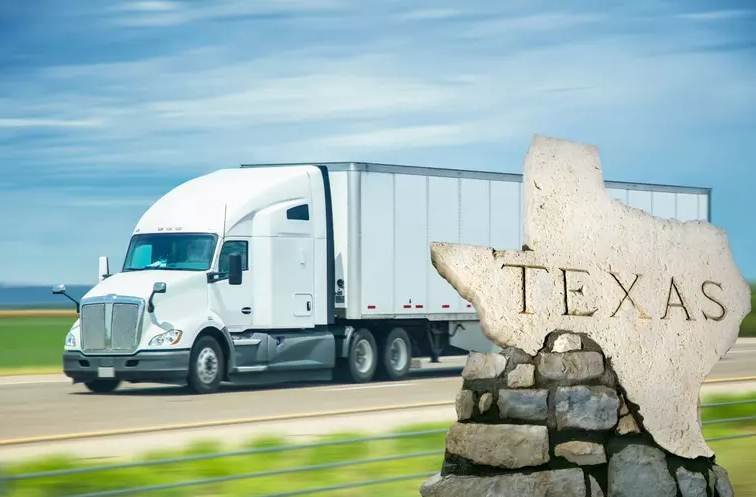
Every state publishes its own version of the commercial driver license handbook. Most of them are basically the same document with a different state seal on the cover. Texas is not most states.
The Texas CDL manual has something no other state handbook has: a 25-page section buried near the back called "Section 14 — Texas Special Requirements." It covers a completely separate set of state laws that have nothing to do with federal FMCSA regulations. And if you are applying for a Class A or Class B CDL in Texas, you have to pass a dedicated 20-question exam on this section alone.
Drivers who transfer in from California, Florida, or Ohio walk into the DPS thinking they know the material cold. They have been driving trucks for ten years. They studied the federal manual. They skip Section 14. And they fail.
This guide breaks down how the Texas CDL manual is organized, what Section 14 actually covers, and how to use the CDL handbook Texas publishes to walk out of the DPS with your commercial learner's permit on the first try.
How the Texas CDL Manual Is Organized
The Texas CDL manual follows the same general structure as the federal model handbook that the FMCSA provides to all 50 states. Sections 1 through 13 are nearly identical whether you are testing in Austin or Albany. Here is the layout:
- Section 1 — Introduction: Who needs a CDL, federal classifications (Class A, B, C), and exemptions.
- Section 2 — Driving Safely: Vehicle inspection, basic control, shifting, space management, night driving, and hazard perception.
- Section 3 — Transporting Cargo: Weight distribution, load securement, and blocking/bracing.
- Section 5 — Air Brakes: System components, inspection procedures, and the antilock braking system requirements.
- Section 6 — Combination Vehicles: Coupling, uncoupling, and inspecting the fifth wheel and glad hands. Required for Class A.
- Sections 7 through 10 — Endorsements: Doubles/Triples, Tank Vehicles, Passenger, and Hazardous Materials.
- Section 11, 12, 13 — The Skills Tests: Vehicle inspection test, basic control skills test, and the road test.
If you have studied a CDL manual in any other state, you already know this material. The CDL handbook Texas publishes covers the same federal regulations in these sections. The difference starts on the next page.
Section 14: The Texas Special Requirements
This is the section that separates Texas from every other state. Section 14 — Texas Special Requirements for Commercial Motor Vehicles is a standalone body of law based on the Texas Transportation Code, not the Federal Motor Carrier Safety Regulations.
The Texas DPS pulls 20 multiple-choice questions directly from this section. You need a 70% to pass (14 out of 20). That sounds generous, but the questions are oddly specific. They ask about exact measurements in inches, color requirements for lights, and mile-radius exemptions for farmers. If you have not read Section 14 carefully, you will guess wrong on at least half of them.
Here is what Section 14 actually covers and where drivers get tripped up.
Vehicle Height, Width, and Length Limits
Texas allows taller vehicles than most states. This is the single most-tested fact on the Section 14 exam.
- Maximum vehicle height in Texas: 14 feet. The federal standard used in most states is 13 feet 6 inches. If a test question asks about height in Texas, the answer is always 14 feet.
- Maximum width: 102 inches (8.5 feet). This matches the federal standard.
- Maximum length for a single motor vehicle: 45 feet.
- Maximum semi-trailer length: 59 feet.
- Maximum length for each trailer in a double-trailer combination: 28.5 feet.
The height trap: you will see questions that try to bait you with "13 feet 6 inches" as an answer choice because that is the standard everywhere else. Do not fall for it. In Texas, it is 14 feet.
Lighting, Reflectors, and Clearance Lamps
Section 14 goes deep into vehicle lighting requirements. You need to know the colors and mounting heights for specific lamps.
Clearance lamps: Every truck or bus 80 inches or wider must have:
- Front clearance lamps: Two, amber.
- Rear clearance lamps: Two, red.
Side marker lamps:
- Front side markers: Amber.
- Rear side markers: Red.
Reflectors: Every commercial motor vehicle must have at least two red reflectors mounted on the rear. The mounting height must be between 24 inches and 60 inches above the ground.
The farm tractor rule: Farm tractors and self-propelled farm equipment operating after dark must have two headlamps, one taillight, and two red reflectors. This sounds like a minor detail but it shows up on the exam frequently because Texas has a massive agricultural industry and the DPS wants drivers to know the minimum lighting for farm equipment sharing public roads.
Mud Flaps (Safety Guards)
This is the classic Section 14 question. Every driver who has taken the Texas CDL permit test remembers it.
All trucks and trailers with four or more tires on the rear axle must have safety guards (mud flaps) behind the rear wheels. The flaps must be suspended within 8 inches of the roadway surface.
The exam will offer choices like 6 inches, 8 inches, and 12 inches. The answer is 8 inches. Write it on your hand if you have to.
Cargo Extensions: Front and Rear Overhang
Texas law limits how far cargo can stick out past the body of the vehicle.
- Front overhang: No more than 3 feet beyond the front of the vehicle.
- Rear overhang: No more than 4 feet beyond the rear.
- If cargo extends more than 4 feet past the rear: You must attach a red flag at least 12 inches square during daylight hours, or a red light visible from 500 feet at night.
The connection between two towed vehicles (drawbar, chain, or cable) cannot exceed 15 feet. If you use a chain or cable, you must attach a white flag at least 12 inches square to the connection so other drivers can see it.
Coasting Is Illegal
This one catches experienced drivers off guard because it feels like common sense rather than law. In Texas, it is illegal to coast downhill with the transmission in neutral or the clutch disengaged.
The reason is straightforward: coasting kills your ability to accelerate out of danger and puts the full braking load on your service brakes. On a long Texas grade — think the hills outside Austin or the passes in West Texas — that means brake fade and potentially a runaway truck.
Railroad Crossing Rules
Section 14 reinforces the railroad crossing requirements with Texas-specific language:
- Vehicles carrying placarded hazardous materials must stop between 15 and 50 feet of the nearest rail.
- School buses and passenger buses must stop at all railroad crossings regardless of whether a train is visible.
- You must not shift gears while crossing the tracks. Select a gear before the crossing that will carry you all the way across.
Farm and Ranch Exemptions
Texas has enormous agricultural operations, and Section 14 carves out specific CDL exemptions for farmers that do not exist in federal law.
A farmer can operate a combination of vehicles that would normally require a Class A CDL without a CDL if all of the following conditions are met:
- The vehicle is controlled and operated by the farmer, a family member, or an employee of the farmer.
- The vehicle is used to transport agricultural products, farm machinery, or farm supplies to or from the farm.
- The vehicle is not used for hire (no common or contract carrier work).
- The vehicle is operated within 150 miles of the farm.
There is also a special provision for cotton vehicles. Vehicles transporting seed cotton modules can be up to 10 feet wide instead of the standard 102 inches, provided they are properly registered. This exemption exists because cotton module hauling is a seasonal, short-distance operation unique to Texas agriculture.
How to Use the Texas CDL Handbook to Study
Having the CDL handbook Texas provides is only useful if you know how to attack it. Here is the strategy that works.
Step 1: Download the Official PDF
The Texas DPS publishes the full Texas Commercial Driver License Handbook as a free PDF on the DPS website. You can also pick up a printed copy at any Texas driver license office. Do not pay anyone for a copy.
The handbook is roughly 180 pages. You do not need to read all of it cover to cover. Focus on the sections that match your testing requirements.
Step 2: Know Which Tests You Need to Pass
The Texas CDL permit test is not a single exam. It is a series of written knowledge tests. The ones you must take depend on the class of CDL and the endorsements you want.
For a standard Class A CDL in Texas, you must pass:
- General Knowledge — 50 questions, 80% to pass. Covers Sections 1 through 3 and Section 6 of the manual.
- Combination Vehicles — 20 questions, 80% to pass. Covers Section 6.
- Air Brakes — 25 questions, 80% to pass. Covers Section 5. If you skip this test, you get an L restriction (no air brake vehicles).
- Texas Special Requirements (Section 14) — 20 questions, 70% to pass. Covers Section 14 only.
If you are adding endorsements, each one is a separate test:
- Tanker (N): 20 questions from Section 8.
- HazMat (H): 30 questions from Section 9. Requires TSA clearance and ELDT training first.
- Passenger (P): 20 questions from Section 4.
- Doubles/Triples (T): 20 questions from Section 7.
Step 3: Read Section 14 Twice
This is not optional. Read Section 14 of the Texas CDL manual two times before your test date. The first read gives you familiarity. The second read is where you memorize the specific numbers: 14 feet, 8 inches, 150 miles, 15 feet, 24 to 60 inches, 4 feet, 3 feet.
These numbers are the raw material for every Section 14 exam question. If you know them cold, the test becomes straightforward.
Step 4: Take Practice Tests
Reading alone is not enough. You need to test yourself under realistic conditions. After you finish studying Section 14, use a Texas CDL practice test that specifically covers the Special Requirements material. Most generic CDL practice apps do not include Section 14 questions because it is Texas-only content.
If you are also prepping for the General Knowledge exam, try our CDL General Knowledge Practice Test to gauge your readiness on the federal material.
Common Mistakes on the Texas CDL Permit Test
After watching thousands of drivers go through the Texas DPS testing process, these are the patterns that cause failures.
Mixing Federal and Texas Standards
The most dangerous mistake is confusing federal limits with Texas limits. The federal maximum vehicle height is 13 feet 6 inches. The Texas maximum is 14 feet. If a question says "in Texas," answer with the Texas number. If it says "on the federal interstate system," use the federal number.
Skipping Section 14 Entirely
This happens most often with experienced drivers who are transferring an out-of-state CDL to Texas. They assume the Special Requirements test is just a rehash of the General Knowledge exam. It is not. Section 14 covers material that does not exist in any other state's manual. If you do not study it, you will fail it.
Relying on Generic CDL Apps
Most CDL practice test apps on the App Store are built around the federal model handbook. They do not include Texas-specific questions from Section 14. If you have been scoring 95% on a generic app and then fail the Special Requirements test at the DPS, this is why. Use a Texas Special Requirements practice test that pulls directly from the Texas Transportation Code.
Memorizing Wrong Numbers
The Section 14 exam is a numbers game. Here is a quick reference for the most-tested values:
| Measurement | Texas Value |
|---|---|
| Maximum vehicle height | 14 feet |
| Maximum vehicle width | 102 inches |
| Mud flap clearance | Within 8 inches of the road |
| Reflector mounting height | 24 to 60 inches above ground |
| Maximum front cargo overhang | 3 feet |
| Maximum rear cargo overhang (before flag required) | 4 feet |
| Maximum tow connection length | 15 feet |
| Farm exemption radius | 150 miles from the farm |
| Cotton module vehicle width | 10 feet |
| HazMat railroad crossing stop distance | 15 to 50 feet from nearest rail |
Print this table or screenshot it. These ten numbers cover the majority of Section 14 questions.
The Texas CDL Permit Test: What to Expect at the DPS
When you arrive at the Texas DPS to take your written tests, here is what happens.
You check in at the counter and tell the clerk which tests you need. For a Class A CDL permit, you request General Knowledge, Combination Vehicles, Air Brakes, and Texas Special Requirements.
The clerk directs you to a computer testing kiosk. You take all four tests in one session. There is no time limit at most locations. You can skip questions and come back to them.
You need to pass all four tests to receive your Commercial Learner's Permit (CLP). If you fail one test but pass the others, you only need to retake the one you failed. You can come back the next business day to retake it at no additional fee.
What to bring:
- Proof of identity: Texas driver license or valid out-of-state license, plus a birth certificate or passport.
- Proof of residency: Two documents showing a Texas address (utility bill, bank statement, lease agreement).
- Social Security card or a document showing your SSN.
- DOT Medical Card: A valid Medical Examiner's Certificate (Form MCSA-5876). Without this, the DPS will not issue your CLP.
- Payment: The CDL application fee in Texas is currently $97 for a new Class A CDL (valid for 8 years). Some locations accept credit cards, others only take checks or money orders. Check ahead.
If you are under 21, you will receive an intrastate-only restriction. You can only drive commercial vehicles within Texas until you turn 21.
Section 14 Compared to the Federal Manual
If you have already studied the federal CDL manual, here is a quick comparison showing where Texas goes its own way. This is not an exhaustive list, but it covers the areas that generate the most exam questions.
Vehicle height: Federal says 13 feet 6 inches on the National Network. Texas says 14 feet on state roads. The Texas CDL manual treats 14 feet as the standard answer.
Mud flaps: The federal regulations mention splash and spray suppression but do not give a specific measurement. Texas requires mud flaps within 8 inches of the ground for vehicles with four or more rear tires.
Farm exemptions: Federal law has a farm exemption (49 CFR 390.5), but Texas expands it with the 150-mile radius rule and the cotton module width exception. These are Texas Transportation Code provisions not found in the FMCSA regulations.
Coasting: Not specifically addressed in the federal commercial driver handbook. Texas makes it a clear violation under state law.
Cargo extension flags: The federal rules cover load securement but leave flag requirements more general. Texas specifies the 4-foot rear overhang threshold and the 12-inch square red flag or red light.
Frequently Asked Questions (FAQ)
What is Section 14 in the Texas CDL manual?
Section 14 covers the Texas Special Requirements for Commercial Motor Vehicles. It is a state-specific section based on the Texas Transportation Code that covers vehicle height and width limits, lighting and reflector requirements, mud flap rules, cargo extension limits, railroad crossing procedures, coasting prohibitions, and farm vehicle exemptions. You must pass a separate 20-question exam on this material to get a Class A or Class B CDL in Texas.
How many tests do you take for a Texas CDL permit?
For a standard Class A CDL, you must pass four written tests at the Texas DPS: General Knowledge (50 questions), Combination Vehicles (20 questions), Air Brakes (25 questions), and Texas Special Requirements (20 questions). Each endorsement you want to add (Tanker, HazMat, Passenger, Doubles/Triples) requires an additional separate test.
Can I get the Texas CDL handbook for free?
Yes. The Texas DPS offers the complete Texas Commercial Driver License Handbook as a free PDF download on the DPS website. You can also pick up a free printed copy at most Texas driver license offices. Do not pay any third-party website for a copy of the handbook.
Conclusion: Do Not Skip Section 14
The Texas CDL manual is not just another copy of the federal handbook with a different cover. Section 14 contains state laws that exist nowhere else in the country, and the Texas DPS will test you on every page of it.
The good news is that Section 14 is predictable. The exam asks about specific numbers — 14 feet, 8 inches, 150 miles, 4 feet, 3 feet. Once you memorize those values and understand the lighting and equipment rules, the test becomes manageable.
Start by downloading the free CDL handbook Texas provides from the DPS website. Read Sections 1 through 6 for the federal material. Then read Section 14 twice. Take a Texas Special Requirements practice test to verify you have the numbers locked in. Walk into the DPS prepared, and you will walk out with your permit.
Combination
Learn the 5-step coupling checklist and rollover prevention techniques.
Explore More Practice Tests
General Knowledge
The #1 starting point. Covers vehicle inspections & basic road safety rules.
HazMat (H)
Master the placarding tables, shipping papers, and TSA requirements.
Air Brakes (L)
Memorize critical PSI numbers and the 3-step L.A.B. check process.
Combination
Learn the 5-step coupling checklist and rollover prevention techniques.
Pass Your CDL Exam First Try
Don't guess. Practice with 1000+ real exam questions updated for 2026.
Start Free Practice