What is a Class A CDL? Requirements, Vehicles & Salary (2026 Guide)
Don't just read the guide. Test yourself with the actual questions likely to appear on your CDL test.
You see them on the highway every day. Massive 18-wheelers hauling everything from groceries to gasoline. You know they make good money, and you know they have a special license.
But when you start researching how to join them, you get hit with alphabet soup: Class A, Class B, Class C, GCWR, GVWR.
The most common question for beginners is simple: What is a CDL A?
In short, the Class A Commercial Driver’s License (CDL) is the "Master Key" of the trucking world. It is the license that allows you to drive the biggest, heaviest, and most profitable vehicles on the road.
If you are looking for a career change in 2026 that offers job security and a path to a six-figure income, understanding this license is step one. This guide breaks down the legal definition, the vehicles you can drive, and why most new drivers should skip Class B and aim straight for Class A.
The Official Definition: The "Math" Behind the License
The Federal Motor Carrier Safety Administration (FMCSA) defines license classes based on weight. It’s not about the number of wheels; it’s about the scale ticket.
So, what is a CDL A technically?
You need a Class A CDL to operate any combination of vehicles with a Gross Combination Weight Rating (GCWR) of 26,001 or more pounds, provided the Gross Vehicle Weight Rating (GVWR) of the vehicle being towed is in excess of 10,000 pounds.
Let’s Translate That into English:
There are two conditions you must meet to require a Class A:
- Heavy Combo: The total weight rating of the truck + trailer must be over 26,000 lbs.
- Heavy Trailer: The trailer itself must be rated over 10,000 lbs.
The "Heavy Trailer" Rule is Key: This is the main difference between Class A and Class B.
- If you drive a huge dump truck (30,000 lbs) pulling a tiny generator trailer (3,000 lbs), you only need a Class B. Why? Because the trailer is light.
- If you drive a pickup truck (14,000 lbs) pulling a massive flatbed equipment trailer (14,000 lbs), you need a Class A. Why? Because the total is 28,000 lbs AND the trailer is over 10,000 lbs.
What Vehicles Can You Drive with a Class A?
The beauty of the Class A license is its versatility. It is a "Universal" commercial license.
When you ask what is a CDL A, you are really asking about opportunity. With this license, you can legally operate:
1. Tractor-Trailers (The Big Rigs)
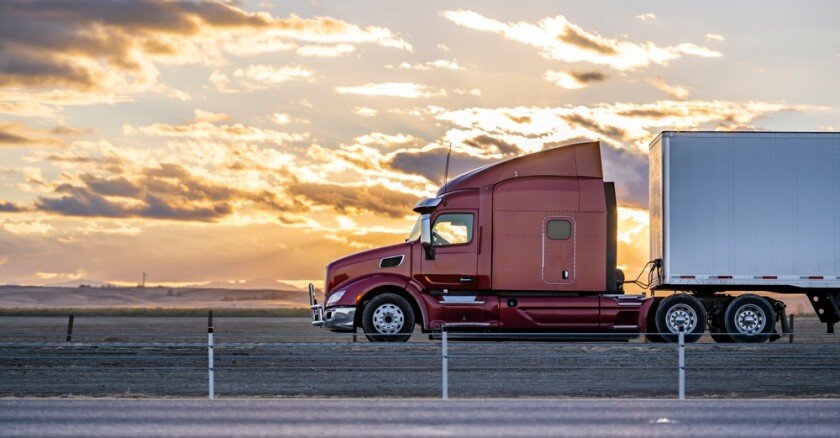
This is the standard 53-foot dry van, reefer (refrigerated), or flatbed pulled by a semi-tractor. This is the bread and butter of the OTR (Over-the-Road) industry.
2. Tanker Vehicles
Hauling liquids—milk, water, gasoline, or chemicals. (Note: You need the "N" endorsement for this).
3. Livestock Carriers
Hauling cattle, hogs, or horses. These drivers are the "cowboys" of the highway, often running specialized routes with time-sensitive live cargo.
4. Doubles and Triples
Pulling two or three trailers at once. (Requires the "T" endorsement). Common for LTL carriers like FedEx and UPS.
5. Flatbeds & Lowboys
Hauling construction equipment, lumber, or oversized machinery.
6. AND... Everything in Class B and C
This is the secret weapon. A Class A license automatically qualifies you to drive Class B vehicles.
- Want to drive a local dump truck for a construction season? You can do it with a Class A.
- Want to drive a cement mixer? You can do it.
- Want to drive a box truck? You can do it.
You never have to "downgrade." A Class A covers it all (except motorcycles).
Class A vs. Class B: Why Aim Higher?
If Class A is harder to get, why not just settle for Class B?
1. Salary Ceiling Class B jobs (dump trucks, delivery vans, buses) often pay by the hour. They are good jobs, but they have a salary cap. You typically top out around $60k-$70k unless you are in a union or specialized role. Class A jobs (especially specialized hauling) have a much higher ceiling. Experienced Class A drivers can earn $100k+, and Owner-Operators can gross significantly more.
2. Job Availability There is a persistent shortage of long-haul Class A drivers. If you have a clean Class A license, you can likely find a job in any city in America within 48 hours. Class B jobs are more local and competitive.
3. The "Combo" Skill Set Learning to back up a trailer (articulated vehicle) is a skill that is hard to learn but valuable to have. Anyone can drive a straight truck (Class B) with a few days of practice. Backing a 53-foot trailer into a tight dock takes professional training. Employers pay for that skill.
Combination
Learn the 5-step coupling checklist and rollover prevention techniques.
The Requirements: How to Get It in 2026
Getting a Class A CDL isn't like getting a regular driver's license. The federal government tightened the rules in 2022 with the ELDT (Entry-Level Driver Training) mandate.
Here is the roadmap:
Step 1: The CLP (Permit)
You must pass three written tests at the DMV to get your Commercial Learner's Permit.
- General Knowledge: 50 questions on safety and regulations.
- Air Brakes: 25 questions on the air brake system.
- Combination Vehicles: 20 questions on driving with a trailer.
Step 2: The ELDT School
You cannot just borrow your uncle's truck and take the test anymore. You must attend a registered training provider (trucking school). They will verify your theory training and behind-the-wheel hours in a federal database.
Step 3: The Skills Test
This is the final boss. It includes:
- Pre-Trip Inspection: Pointing to 100+ parts on the truck and explaining if they are broken.
- Basic Control Skills: Backing maneuvers in a yard (Straight line, Offset, Alley Dock).
- Road Test: Driving on public streets with an examiner.
Is a Class A CDL Right For You?
Trucking is a lifestyle, not just a job.
You should get a Class A if:
- You want maximum earning potential ($80k+).
- You enjoy solitude and the idea of seeing the country (OTR).
- You want the flexibility to drive almost any commercial vehicle.
You might prefer a Class B if:
- You absolutely must be home every single night.
- You hate the idea of backing up a trailer.
- You prefer physical labor (like trash collection or concrete work) over pure driving.
Conclusion
So, what is a CDL A? It is a professional credential that turns you into a highly skilled operator. It signifies that you have mastered the air brake system, combination vehicles, and the safety regulations required to move 80,000 lbs down the interstate.
It is harder to get than a Class B, but the rewards—financial freedom and career stability—are significantly higher.
If you are ready to start this journey, your first step is the permit. Don't be intimidated by the "Combination Vehicles" test. Start with our free practice tests and build your knowledge one step at a time.
Ready to test your knowledge? Start with our Class A Practice Test and see where you stand.
Explore More Practice Tests
General Knowledge
The #1 starting point. Covers vehicle inspections & basic road safety rules.
HazMat (H)
Master the placarding tables, shipping papers, and TSA requirements.
Air Brakes (L)
Memorize critical PSI numbers and the 3-step L.A.B. check process.
Combination
Learn the 5-step coupling checklist and rollover prevention techniques.
Pass Your CDL Exam First Try
Don't guess. Practice with 1000+ real exam questions updated for 2026.
Start Free Practice