Hydroplaning CDL Guide 2026: Definition, Prevention & Test Answers
Don't just read the guide. Test yourself with the actual questions likely to appear on your CDL test.
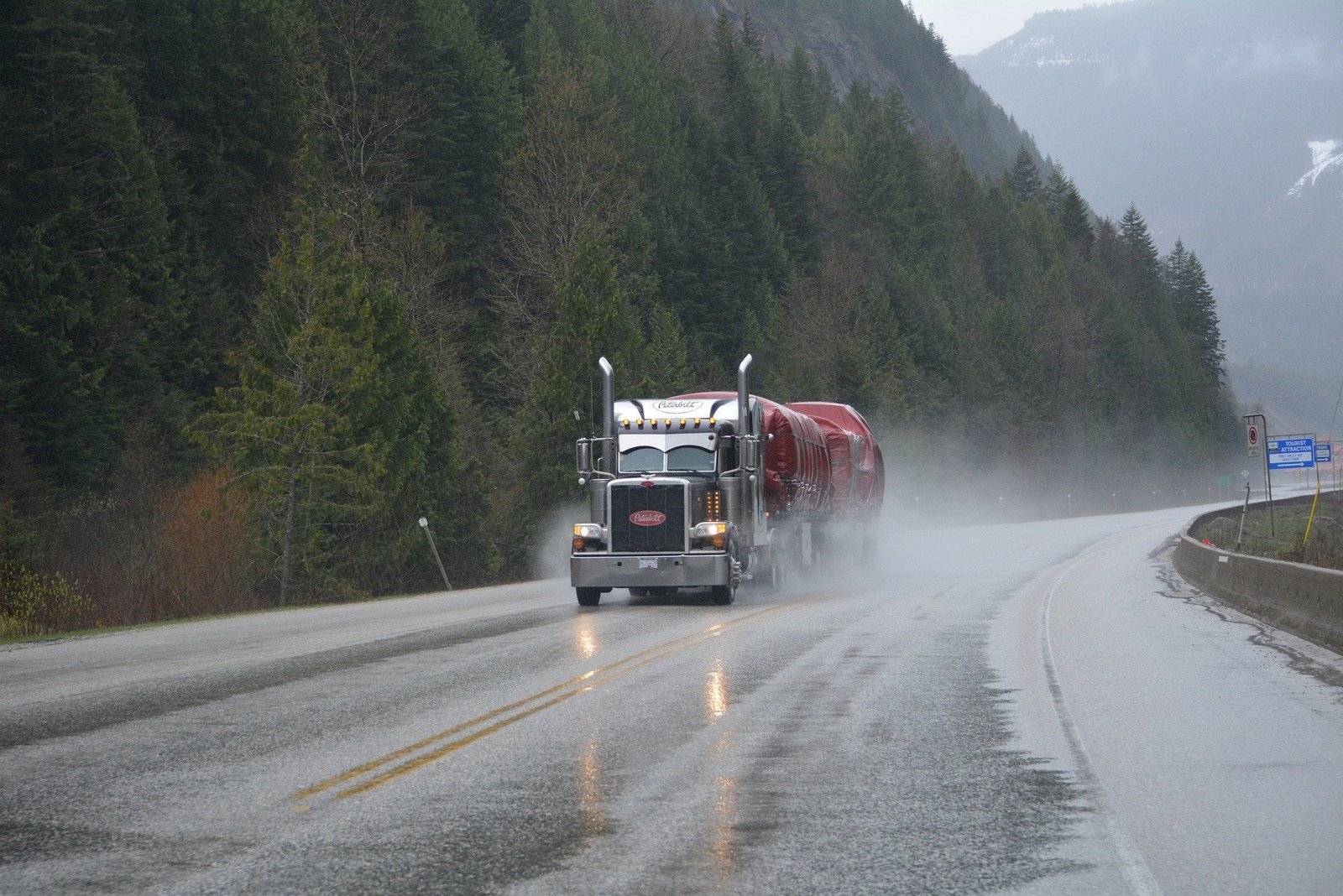
You are cruising down the interstate at 65 MPH. It’s been a dry summer, but storm clouds have gathered, and a light rain starts to fall. You turn on your wipers, thinking nothing of it.
Suddenly, your steering wheel feels weird—loose, disconnected, like you’re turning it but nothing is happening. You tap the brakes, and the rear of your trailer starts to swing out.
You are hydroplaning. And in an 80,000-pound vehicle, this is often the prelude to a catastrophic jackknife.
Weather-related questions are a huge part of the General Knowledge exam, yet many students gloss over them to focus on air brakes. That is a mistake. The DMV specifically tests your knowledge of hydroplaning cdl safety because it is a leading cause of preventable accidents.
In this guide, we aren't just going to give you the textbook definition. We are going to explain the physics, answer the specific test questions like "what is hydroplaning cdl", and teach you the survival skills to keep your rig upright when the roads get slick.
The Definition: What is Hydroplaning?
If you get the question what is hydroplaning cdl on your permit test, you need to know the technical answer.
Hydroplaning occurs when water builds up in front of your tires faster than the weight of your vehicle can push it out of the way. The water pressure causes your tires to lift off the road surface and ride on a thin film of water.
Think of it like water skiing. When the boat moves fast enough, the skis rise up on top of the water.
When this happens to a truck:
- No Traction: Your tires are not touching asphalt; they are touching water.
- No Steering: Turning the wheel does nothing because there is no friction.
- No Braking: Hitting the brakes stops the wheel from spinning, but the truck keeps sliding (like a sled).
The "Speed vs. Weight" Myth
Many rookie drivers think, "I'm heavy, so I won't hydroplane."
This is dangerous thinking. While it is true that a fully loaded truck cuts through water better than an empty one, hydroplaning cdl incidents happen to everyone.
- Empty Trailers: Are highly susceptible because they lack the weight to push water out of the tire tread.
- Bobtails: Are notoriously dangerous in rain because all the weight is on the front, leaving the drive tires prone to floating.
The 3 Ingredients for Disaster
For hydroplaning to occur, you generally need three factors combining at once:
- Speed: This is the biggest factor. The CDL manual states that hydroplaning can start at speeds as low as 30 MPH if there is a lot of water.
- Tire Tread Depth: Worn tires cannot channel water away. Federal law requires 4/32 inch tread on steer tires and 2/32 inch on drive tires, but in heavy rain, legal minimums might not be enough.
- Water Depth: It doesn't take a lake. Just a thin sheet of standing water is enough.
The Critical CDL Test Questions
The DMV test bank has very specific questions about this topic. You need to memorize these answers.
Question 1: When is the road most slippery?
Answer: During the first 10 to 15 minutes of a rainstorm.
Why? Roads accumulate oil, grease, and diesel fuel drippings during dry spells. When it first starts to rain, the water mixes with this oil to create a slick, greasy film. It is essentially like driving on ice. After about 20-30 minutes of heavy rain, most of the oil washes away, and traction actually improves (though hydroplaning risk remains).
Question 2: What should you do when your vehicle hydroplanes?
This is the most common question: what should you do when your vehicle hydroplanes cdl students get asked this constantly.
The Answer:
- Release the Accelerator: Take your foot off the gas immediately.
- Do NOT Brake: This is the most important part. Braking will lock the wheels (or activate ABS aggressively), which breaks whatever tiny amount of traction you might have left.
- Do NOT Steer Abruptly: Keep the wheel straight. If you turn the wheel while floating, and then the tires suddenly catch dry pavement, the truck will snap violently in that direction (causing a rollover).
Prevention: How to Stay Glue to the Road
Passing the test is one thing; surviving the job is another. Here is how professional drivers prevent hydroplaning cdl scenarios.
1. Slow Down (The 1/3 Rule)
The FMCSA guidelines suggest reducing your speed by 1/3 on wet roads.
- If the speed limit is 60 MPH, you should be doing 40 MPH.
- If the speed limit is 70 MPH, you should be doing under 50 MPH.
If you are passing cars in a rainstorm, you are driving too fast.
2. Check Your Tread Depth
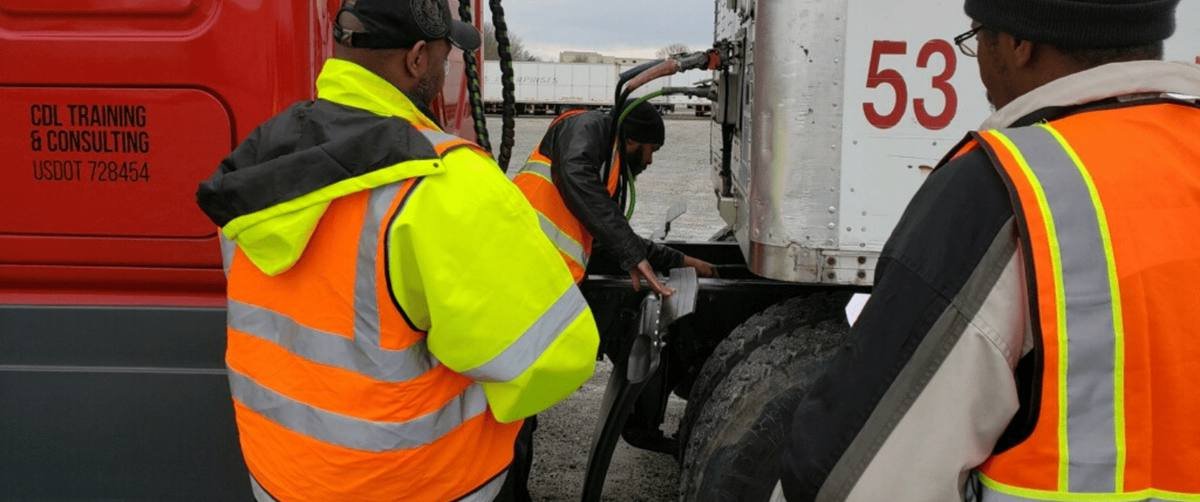
During your Pre-Trip Inspection, look closely at your tire grooves. The grooves act like pumps—they suck water in and shoot it out the sides. If your tread is low, the pump is broken. The water has nowhere to go but under the tire.
3. Watch for "Spray"
Look at the trucks in front of you.
- Heavy Spray: If their tires are throwing up huge clouds of water, the road is wet but the tires are making contact.
- No Spray: If the road looks wet but the tires aren't throwing spray, watch out. It might be hydroplaning, or worse, Black Ice.
Hydroplaning vs. Black Ice
It is important to distinguish these two hazards, as they often appear in similar chapters of the CDL manual.
- Hydroplaning: Happens in rain/standing water. You feel the steering get "light."
- Black Ice: Happens when the temperature is near freezing (32°F). The road looks wet/shiny but is actually frozen. You feel nothing—complete silence and zero friction.
The Test Tip: If the test asks about "shading" on the road or "shiny" surfaces when the temperature is dropping, the answer is Black Ice. If it asks about "water skiing" or "light steering" in rain, the answer is hydroplaning cdl.
What to Do If You Start to Slide (Skid Recovery)
If hydroplaning turns into a full-blown skid (where the trailer starts coming around), your reaction must be instant.
- Stop Braking: This lets the wheels start rolling again. Rolling wheels have traction; sliding wheels do not.
- Counter-Steer: Steer in the direction you want the front of the truck to go. (Old advice said "steer into the skid," which is confusing. Just look where you want to go and steer there).
- Clutch In (Manuals): If you are driving a manual transmission, push the clutch in. This disconnects the engine from the wheels, removing any torque that might be spinning the tires.
Conclusion
The term hydroplaning cdl refers to a loss of contact between your tires and the road. It is terrifying, it happens fast, and it is entirely preventable.
The main takeaway for your permit test and your career is this: Speed is the enemy.
Tires are designed to channel water, but they have a limit. Once you exceed that limit—usually around 35-40 MPH in heavy rain—physics takes over. You are no longer a driver; you are a passenger.
When you see the rain start to fall, remember the rule: Slow down by 1/3, watch for the oil slick in the first 10 minutes, and never, ever slam on the brakes if you feel the wheel go light.
Be safe out there, and keep the shiny side up.
Air Brakes (L)
Memorize critical PSI numbers and the 3-step L.A.B. check process.
Explore More Practice Tests
General Knowledge
The #1 starting point. Covers vehicle inspections & basic road safety rules.
HazMat (H)
Master the placarding tables, shipping papers, and TSA requirements.
Air Brakes (L)
Memorize critical PSI numbers and the 3-step L.A.B. check process.
Combination
Learn the 5-step coupling checklist and rollover prevention techniques.
Pass Your CDL Exam First Try
Don't guess. Practice with 1000+ real exam questions updated for 2026.
Start Free Practice