

Kentucky splits CDL service between the Kentucky Transportation Cabinet (KYTC) Driver Licensing Regional Offices and Kentucky State Police (KSP) testing. The old circuit-court-clerk process is no longer the correct statewide instruction. A first-time applicant generally starts at a Regional Office, tests with KSP, and returns to the Regional Office for the permit or final credential.
Kentucky CDL Quick Facts
| Item | Current Kentucky requirement |
|---|---|
| Licensing agency | KYTC Division of Driver Licensing; testing by Kentucky State Police |
| Minimum age | 18 for Kentucky intrastate operation; 21 for interstate commerce or HazMat |
| Standard CLP credential | $11; REAL ID CLP $14 |
| Background check | $3 NCIC check during the Regional Office transaction |
| Final CDL issuance | $18.75–$50, depending on credential and validity |
| CLP holding period | At least 14 days before the skills test |
| Written retest | Wait 24 hours after a failed attempt |
| ELDT | Required for first Class A/B, B-to-A upgrades, and first H/P/S endorsements |
| Medical submission | Since June 8, 2026, examiners submit certificates electronically through FMCSA NRII |
| Skills test | Pre-trip inspection, basic vehicle control, and road driving through KSP |
| Official handbook | Kentucky Commercial Driver License Manual |
Fees for knowledge testing, endorsements, retests, training, medical exams, and vehicle use can be additional. Confirm the exact transaction total with a Regional Office before your appointment.
Choose the Tests for Your Kentucky Vehicle
A Class A tractor-trailer applicant normally needs General Knowledge, Combination Vehicles, and Air Brakes when the vehicle has air brakes. Class B and C applicants take General Knowledge plus the tests tied to their vehicle and work. Use the appropriate diagnostic rather than studying every endorsement:
- General Knowledge diagnostic
- Air Brakes diagnostic
- Combination Vehicles diagnostic
- Hazardous Materials diagnostic
- Tanker diagnostic
- Doubles and Triples diagnostic
- Pre-Trip Inspection diagnostic
Kentucky CDL Application Steps
1. Confirm eligibility and collect documents
Bring your current driver license and the identity, Social Security, lawful-status, and Kentucky residency documents required for your chosen credential. Decide your interstate or intrastate self-certification category before arriving. Applicants who are medically certified should verify the medical record is current.
2. Start at a Driver Licensing Regional Office
Complete self-certification, pay applicable testing charges, and complete the $3 NCIC check. The Regional Office prepares the transaction before KSP testing. This is the important correction to older Kentucky guides that still direct every applicant to a county circuit clerk.
3. Take written and vision tests with KSP
Schedule the written test through the state system. Take General Knowledge and every test required for the class, brake system, and endorsements you actually need. Kentucky permits written retakes, but requires a 24-hour wait after failure.
4. Return for the CLP
After passing KSP testing, return to the Regional Office. Kentucky lists the standard CLP at $11 and the REAL ID version at $14. A temporary paper permit is issued while the permanent credential is mailed.
5. Complete ELDT and supervised practice
Use an FMCSA Training Provider Registry provider when ELDT applies. On public roads, a qualified CDL holder must occupy the front passenger seat. Hold the CLP at least 14 days before the skills test.
6. Schedule the KSP skills test
Call KSP using the contact instructions on the official CDL page. Supply a safe, registered, and insured vehicle in the same class and configuration you intend to operate, and arrive with a properly licensed accompanying driver. Testing in an automatic-transmission or non-air-brake vehicle can create restrictions.
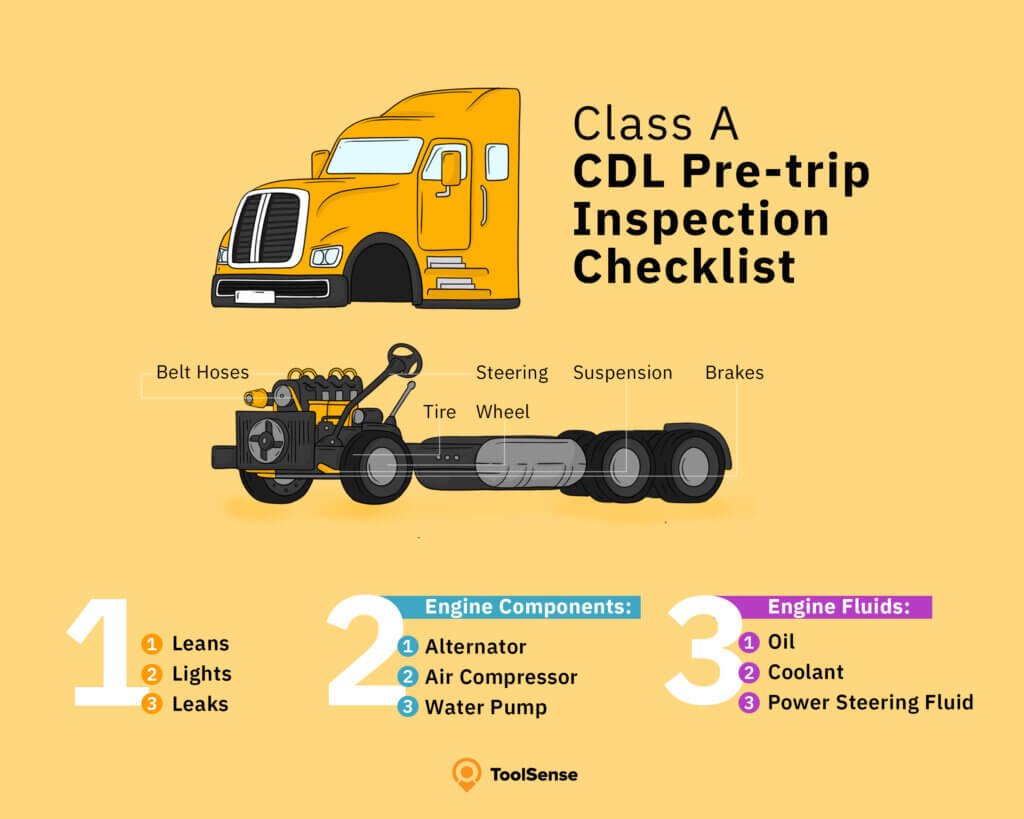
The test includes vehicle inspection, basic control skills, and on-road driving. Treat the pre-trip as an explanation test: name the component, identify defects, and explain why the condition matters.
7. Return to the Regional Office for the CDL
Submit the passing result and complete issuance. KYTC currently states that final CDL fees range from $18.75 to $50. Verify the class, endorsements, and restrictions before leaving.
Kentucky-Specific Details That Prevent Delays
Medical certificates changed in 2026
Effective June 8, 2026, Kentucky says medical examiners must send certificates directly to the FMCSA National Registry II system. KYTC no longer accepts paper medical cards from drivers and discontinued the former myCDL submission portal. Contact the examiner if the record has not appeared.
HazMat follows a separate sequence
Kentucky requires the federal security threat assessment, applicable HazMat ELDT, and a KSP written test. The state lists a $138.25 fingerprint-based background-check fee and a separate $5 HazMat testing fee. Begin early because the threat assessment can outlast an ordinary licensing visit.
Mountain and freight operations
Drivers working I-64, I-65, I-75, or eastern Kentucky grades should apply the manual’s downgrade procedures: select the safe gear before descending, use engine braking appropriately, and preserve service brakes. Coal, aggregate, livestock, and parcel work each add cargo-securement or load-management risks, but the written exam is based on the official manual—not local folklore.
Official Sources
- KYTC — Commercial Driver’s License
- Kentucky Commercial Driver License Manual
- KYTC credential pricing
- FMCSA Training Provider Registry
Kentucky CDL FAQ
Do I still start at the Circuit Court Clerk?
No. Kentucky’s current statewide CDL instructions direct applicants to a Driver Licensing Regional Office, then KSP for testing, then back to the Regional Office for issuance.
How long must I hold the CLP?
At least 14 days. Complete applicable ELDT before scheduling the skills test.
What should I budget?
The CLP credential is $11 standard or $14 REAL ID, the NCIC check is $3, and final CDL issuance ranges from $18.75 to $50. Add testing, endorsements, medical examination, training, vehicle, and any retest costs.