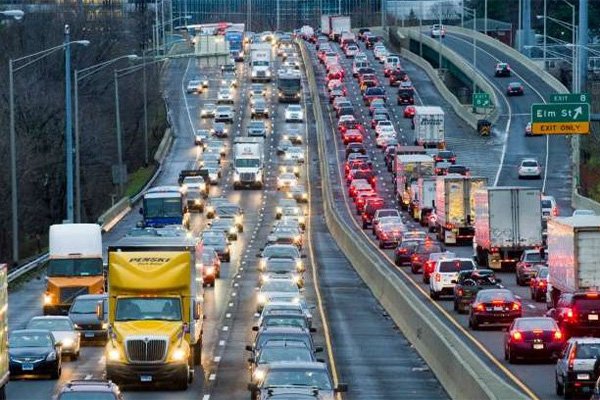
Connecticut is a compact state with demanding commercial routes. I-95 links New York and Boston, I-84 carries freight across the state, and parkway restrictions make commercial route planning important. The Connecticut Department of Motor Vehicles (DMV) manages the licensing process.
This guide corrects the old page’s R-229a instructions. Connecticut DMV currently directs applicants to request the form by mail and complete it before an appointment. CDL knowledge testing is appointment-only, and applicable medical certification must be on the DMV record before the visit.
Connecticut CDL Quick Facts
| Item | Current Connecticut requirement |
|---|---|
| Licensing agency | Connecticut Department of Motor Vehicles (DMV) |
| Existing license | A valid Connecticut driver license is required |
| Minimum age | 18 for Connecticut-only commercial driving; 21 for interstate commerce or HazMat |
| General Knowledge test | 50 questions; at least 40 correct |
| Knowledge-test appointment | Required |
| General Knowledge fee | $16 |
| Endorsement/restriction test | $5 each |
| Commercial learner permit | $20 |
| Skills test | $30 DMV fee |
| New CDL | $70 |
| Official handbook | Connecticut Commercial Driver’s License Manual (PDF) |
Choose Your Connecticut CDL Practice Module
| CDL module | Start here |
|---|---|
| General Knowledge | Open the General Knowledge diagnostic |
| Air Brakes | Open the Air Brakes diagnostic |
| Combination Vehicles | Open the Combination Vehicles diagnostic |
| Hazardous Materials | Open the HazMat diagnostic |
| Tank Vehicles | Open the Tanker diagnostic |
| Doubles and Triples | Open the Doubles and Triples diagnostic |
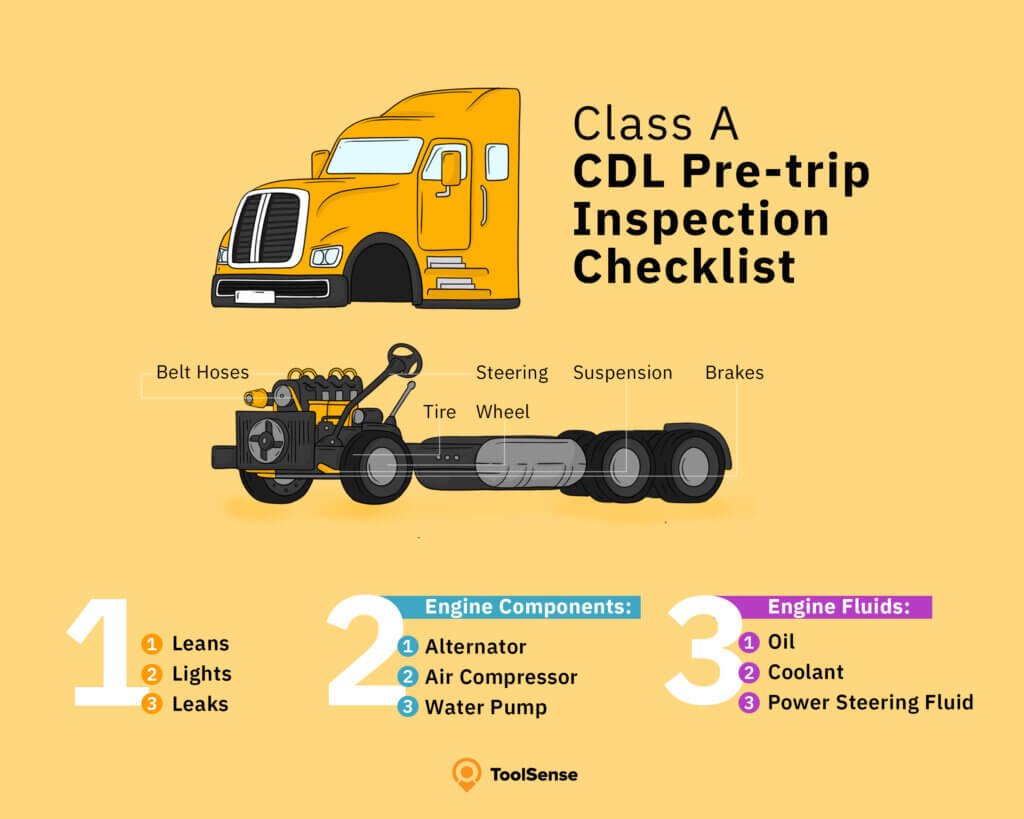
| Pre-Trip Inspection | Open the Pre-Trip diagnostic |
For a typical Class A tractor-trailer with air brakes, prepare for General Knowledge, Air Brakes, and Combination Vehicles. Add only the endorsements required by the intended vehicle, cargo, or job.
Connecticut CDL Application Steps
- Choose the class and endorsements. Use the vehicle’s weight ratings, trailer, passenger use, and cargo.
- Confirm the medical category. When certification applies, make sure the medical record has reached Connecticut DMV before the appointment.
- Request and complete Form R-229a. Follow the live DMV instructions rather than relying on an old downloaded copy.
- Gather the required identity documents. Bring the valid Connecticut license and the DMV-required identity, Social Security, and residency evidence.
- Schedule the CDL knowledge-test appointment. Select all required tests when planning the visit.
- Pass the knowledge tests and purchase the CLP. Check its class, endorsements, restrictions, and expiration date.
- Complete ELDT when applicable. Covered first-time Class A/Class B applicants, Class B-to-A upgrades, and first-time H, P, or S applicants need an FMCSA-registered provider.
- Practice under qualified supervision. Use a vehicle representative of the license sought.
- After the required CLP holding period, pass all three skills-test parts. These are vehicle inspection, basic control skills, and on-road driving.
- Pay the license fee and verify the credential. Make sure the issued restrictions match the test vehicle.

Form R-229a, Medical Status, and Appointments
The current DMV CLP page instructs applicants to request Form R-229a through the mail and complete it before the appointment. This replaces the old page’s unsupported instruction to download it or simply pick it up at a hub office.
Connecticut also tells applicants to have a valid Medical Examiner’s Certificate on file before the appointment when medical certification applies. A paper certificate in a wallet does not guarantee the licensing record has updated, so verify it early enough to correct a transmission problem.
2. Connecticut DMV CDL Fees (2026)
CT fees are broken down into small transactions.
| Item | Cost | Notes |
|---|---|---|
| General Knowledge Test | $16.00 | Per attempt. |
| Endorsement Test | $5.00 | Per endorsement. |
| Learner's Permit (CLP) | $20.00 | Paid after passing the required knowledge tests. |
| Skills Test Fee | $30.00 | Paid before scheduling road test. |
If an applicant fails a knowledge test, Connecticut DMV says a new appointment, application, and test fee are required. Medical exams, ELDT, test-vehicle access, and the federal HazMat screening are separate costs.
Connecticut CLP, ELDT, and Skills Test
A CLP is supervised practice authority, not permission to operate alone. Federal rules require a minimum 14-day holding period before the skills test. The supervising driver must have the appropriate CDL and endorsements.
ELDT completion is reported electronically to the federal Training Provider Registry. Confirm that the provider is registered and the completion record appears before scheduling a covered test.
Connecticut Route Restrictions Are Separate From the CDL Test
Connecticut parkways include low bridges and commercial-vehicle restrictions. A CDL does not override posted route restrictions. Use a commercial route, obey posted lane controls, and confirm vehicle height and weight rather than relying on a consumer navigation app. Study the manual for the exam and current Connecticut traffic sources for trip planning.
4. CT Practice Questions
CT law restricts trucks, buses, and trailers from the far-left lane on divided highways with 3 or more lanes to improve traffic flow.
Commercial vehicles are strictly banned from the Merritt Parkway due to low stone arch bridges. Hitting a bridge here carries massive fines and points.
Official Sources
- Connecticut DMV: Get a commercial learner’s permit
- Connecticut DMV: Get a commercial driver’s license
- Connecticut DMV fee schedule
- Connecticut Commercial Driver’s License Manual (PDF)
- FMCSA Training Provider Registry
Rules, fees, forms, and appointment procedures can change. Recheck the official pages before paying or traveling.