
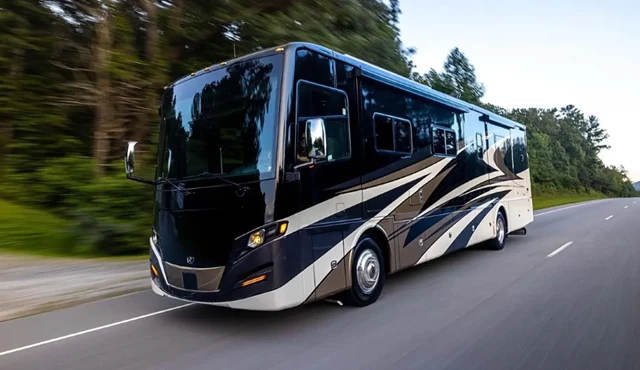
There is no national “non-CDL Class A/B/C” system. Those labels belong to state driver-license programs, and the same letter can mean something different in another state. Before studying or booking a road test, identify the vehicle, its use and the rules of the state that issues your license.
First Decide: CDL or State Noncommercial License?
| Question | Why it matters |
|---|---|
| Is the vehicle used in commerce? | Federal and state commercial rules may apply even when no freight fee is charged |
| Is it a single vehicle or a combination? | This separates heavy straight vehicles from heavy towing configurations |
| What are the GVWR, GCWR and actual weights? | Ratings and actual weights can control the CDL group |
| Is it designed for 16+ occupants including the driver? | Passenger design capacity can require a CDL below 26,001 lb |
| Will it carry placarded hazardous material? | HazMat use can require a CDL below 26,001 lb |
| Is it a personal RV or private vehicle? | Federal CDL rules may not apply, but a state noncommercial class still may |
If the vehicle may be commercial, use the CDL requirement checklist first. If it is genuinely private or recreational, continue with the state-license check below.
What the Non-CDL Letters Usually Describe
These are common patterns, not national definitions:
- Noncommercial Class A: often a heavy combination or heavy trailer configuration used outside commerce.
- Noncommercial Class B: often a heavy single vehicle, such as a qualifying motorhome.
- Noncommercial Class C or D: often the ordinary passenger class, although a state may use the letter for another weight range.
- Endorsement or restriction instead of a new class: some states handle recreational or special vehicles through endorsements, restrictions or exemptions.
Do not take a federal Class A/B weight table and automatically apply its letters to a private RV. Open your state’s driver-license chart and look specifically for “noncommercial,” “exempt,” “recreational vehicle” or “motorhome.”
How to Verify the Correct License in Five Steps
1. Record the vehicle information
Photograph the certification labels on the power unit and trailer. Record GVWR, any manufacturer GCWR, seating design capacity, brake system and actual intended use.
2. Use the issuing state’s official website
Search the state licensing agency—not a dealer forum—for its license-class chart and RV or exempt-vehicle rules. Start from the FMCSA directory of State Driver Licensing Agencies.
3. Ask the exact question
Instead of asking “Do I need a CDL?”, provide the configuration: “I am licensed in this state, the motorhome has this GVWR, the trailer has this GVWR, and it is used only for this purpose. Which license class is required?” Save the agency page or written response.
4. Follow that state’s process
Depending on the state and class, the process may include an application, vision check, knowledge test, learner authority or skills test. Do not assume the CDL medical and ELDT process applies to a state noncommercial license, and do not assume it never applies to your circumstances.
5. Confirm the test vehicle
If a skills test is required, confirm representative-vehicle, equipment, accompanying-driver and document rules before the appointment.
Mistakes That Waste an Appointment
- requesting “Class B” without saying commercial or noncommercial;
- using curb weight instead of the certification-label rating;
- assuming a dealer’s answer controls the licensing agency;
- assuming private use eliminates every license requirement;
- studying CDL-only material before confirming the state test;
- assuming another state’s class letters mean the same thing.
If the State Confirms You Need a CDL
Class B normally begins with General Knowledge and may require Air Brakes. Class A adds Combination Vehicles and may require Air Brakes. Passenger, school bus and HazMat operations add separate requirements.
The state confirmed you need a CDL
Measure your starting point before buying training. Take the 10-question General Knowledge diagnostic, see the weak topics, and use the full 1,500+ question bank when you are on the commercial path.
Start My CDL Diagnostic →Official Sources
- 49 CFR 383.3 — applicability and exceptions
- FMCSA commercial vehicle groups
- FMCSA State Driver Licensing Agency directory
Frequently Asked Questions
Is non-CDL Class C always a special RV license?
No. In many states it is the ordinary passenger license. Use the terminology published by your issuing state.
Does a heavy RV automatically require noncommercial Class B?
No national rule creates that result. Some states require an upgraded class for certain vehicles; others use different classifications or exemptions.
Can I use my home-state license while traveling?
First ensure the home-state license is valid for the vehicle, then verify destination-specific operating rules instead of relying on a general reciprocity statement.