
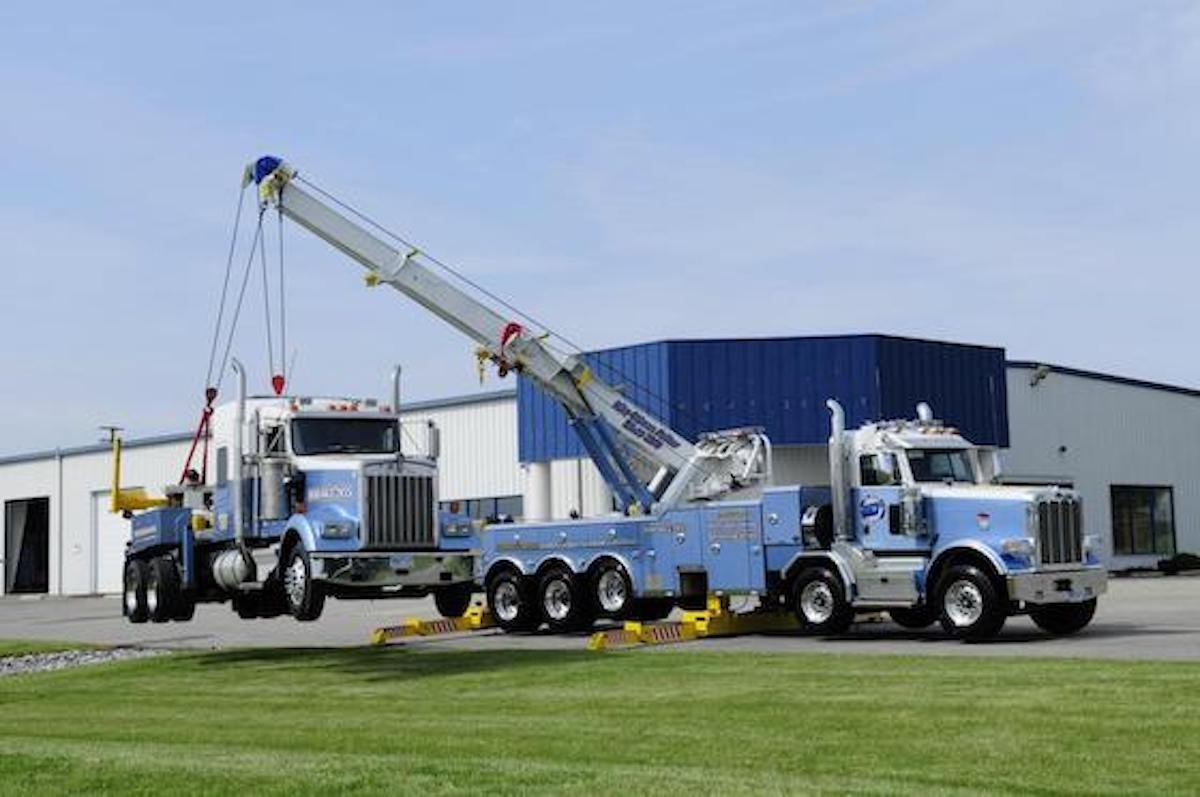
Use this page to answer one question: does this vehicle and this operation require a CDL? Do not decide from truck size, air brakes or the word “personal” alone. The answer depends on vehicle configuration, rating or actual weight, passenger design capacity, hazardous-material use and any exception adopted by your state.
CDL Requirement Checklist
| Check | If yes | Likely result |
|---|---|---|
| Combination is 26,001+ lb and the towed unit is over 10,000 lb | Compare GCWR/GCW and trailer GVWR/GVW | Class A path |
| Single vehicle is 26,001+ lb | Compare GVWR and actual gross weight | Class B path |
| Vehicle is designed for 16+ occupants including the driver | Weight may be below 26,001 lb | Class C/P path unless Group A or B applies |
| Vehicle transports hazardous material requiring placards | Weight may be below 26,001 lb | Class C/H path unless Group A or B applies |
| A military, farm, emergency or covered-farm-vehicle exception may apply | Check the exact federal conditions and state adoption | Verify before driving |
| Personal RV or other noncommercial use | Check your state’s noncommercial license classes | CDL may not apply, but another class may |
The CDL definition and the broader federal definition of a commercial motor vehicle are not identical. A vehicle can be subject to motor-carrier safety rules at a lower threshold without requiring a CDL. This page addresses the CDL decision.
Step 1: Identify the Vehicle Group
Class A combination
A qualifying Group A combination reaches 26,001 pounds or more, using the applicable rating or actual combination weight, and includes a towed unit over 10,000 pounds, again using the applicable rating or actual weight. A trailer over 10,000 pounds by itself does not create Class A if the combination remains below 26,001 pounds.
Class B heavy straight vehicle
Group B covers a single vehicle at 26,001 pounds or more, or that heavy vehicle towing a unit that does not exceed 10,000 pounds. The certification label matters more than the body style.
Class C passenger or HazMat vehicle
When a vehicle does not fit Group A or B, it can still require a CDL if it is designed to transport 16 or more people including the driver, or if it transports hazardous material requiring placards.
For a worked calculation, use the CDL weight requirements guide.
Step 2: Check the Operation, Not Just the Load
“Commerce” is broader than receiving cash for one trip. Interstate commerce can include property or passengers moving as part of a business or interstate supply chain. Personal use is not a universal exemption from every state license requirement.
Write down who owns the vehicle and cargo, why it is moving, whether it is part of a business, whether the movement is interstate in character, and every vehicle rating. If the answer controls a paid trip, ask the state licensing agency or motor-carrier enforcement office for a published answer.
Step 3: Verify Any Exception
Federal CDL rules require states to exempt qualifying military personnel operating CMVs for military purposes. They allow states to adopt limited exceptions for qualifying farm-vehicle operators, firefighters and emergency-response drivers. The farm provision includes purpose, carrier-status and distance conditions; it is not simply “farmer plus 150 miles.” Covered farm vehicles have a separate exception and definition.
For an RV or private heavy vehicle, check the noncommercial classes issued by the driver’s state. Terminology and testing are not nationally uniform. See the non-CDL license guide.
Air Brakes Do Not Create the CDL Class
Air brakes alone do not turn a below-threshold vehicle into a Class A or B CDL vehicle. If the vehicle already requires a CDL, failing the required air-brake knowledge or skills test can place a restriction on the CDL.
Your Next Step
| Result | Action |
|---|---|
| CDL probably not required | Confirm the correct noncommercial class with your state |
| Class B likely | Prepare General Knowledge and Air Brakes if applicable |
| Class A likely | Prepare General Knowledge, Combination Vehicles and Air Brakes if applicable |
| Passenger/HazMat operation | Confirm the endorsement and ELDT obligations |
| Exception may apply | Obtain state confirmation before relying on it |
Your configuration points to a CDL
Start with a 10-question General Knowledge diagnostic. It identifies the rules you know and the sections to study. Full access includes the complete 1,500+ CDL question bank and mock exams.
Check My General Knowledge →Official Sources
- 49 CFR 383.3 — applicability and CDL exceptions
- FMCSA commercial vehicle groups
- FMCSA trailer-over-10,000-pound guidance
- FMCSA state licensing agencies
Frequently Asked Questions
Does a 26,000-pound truck require a CDL?
Usually not by the Group B weight test alone, but passenger design capacity, placarded HazMat and state licensing rules still need checking.
Does a 10,001-pound trailer require Class A?
Not by itself. The qualifying combination must also reach 26,001 pounds or more.
Are RVs automatically legal on a regular license?
Do not assume that. The federal CDL question and the state’s noncommercial license-class question are separate.