You passed General Knowledge, survived Air Brakes, and conquered Combination Vehicles. Now you are staring at the endorsement list and wondering which one to tackle first. The tanker endorsement practice test below is your fastest path to adding the N endorsement to your CDL.
The N endorsement test is only 20 questions. You need 16 correct. No ELDT course required, no TSA background check, no fingerprinting. Just walk into the DMV, sit down at the computer, and answer questions about liquid physics. Most drivers pass on the first attempt with a few hours of focused study.
This tanker endorsement practice test covers every concept on the 2026 exam. Work through each question, read the explanations, and identify the areas where you need more review.
Topic 1: Liquid Surge
Liquid surge is the most tested concept on the tanker endorsement practice test. Expect 4 to 6 questions about it.
Liquid surge occurs because the liquid inside the tank has momentum and keeps moving forward after the truck stops. The liquid hits the front wall of the tank and creates a wave that pushes the truck forward. This is why tanker drivers must brake early and leave extra following distance.
Surge affects the truck in three dangerous ways: it can push you forward after you have stopped (dangerous at intersections), push you outward on curves (rollover risk), and cause a jackknife if the trailer surges while the tractor is slowing. Every question on the **tanker endorsement practice test** about surge references one of these three hazards.
When a tank is completely full, the liquid has no room to move and surge is eliminated. When the tank is partially full, thousands of gallons of liquid can slosh freely, creating dangerous surge forces. A half-full smooth bore tank is one of the most dangerous vehicles on the road.
Topic 2: Baffles, Bulkheads, and Smooth Bore
Expect 3 to 5 questions about tank construction on the tanker endorsement practice test.
Baffles are walls with holes inside the tank that let liquid flow slowly between compartments. They reduce surge by preventing the entire liquid volume from sloshing violently from one end to the other. Baffles do not eliminate surge - they reduce it.
Baffles have holes and crevices where food residue can accumulate and bacteria can grow. Smooth bore tanks have no interior walls, making them easy to clean and sanitize. The tradeoff is much stronger surge, which requires extremely careful driving.
Baffles have holes and allow liquid to flow slowly between sections, reducing surge. Bulkheads are solid walls that create completely separate compartments. Bulkheads let you carry different products in the same tank without mixing.
Topic 3: Outage and Expansion
Expect 2 to 3 questions about outage on the tanker endorsement practice test.
Outage is the unfilled space at the top of the tank. Liquids expand when they get warm, and without outage, the expanding liquid can cause the tank to overflow, rupture, or leak. You never fill a tank 100% full.
Without proper outage, the liquid has nowhere to expand as temperature rises. The resulting pressure can cause the tank to overflow from the dome cover, rupture weld seams, or leak from valves and fittings. This is especially dangerous with hazardous materials.
Topic 4: Safe Driving Procedures
Expect 3 to 4 questions about tanker driving techniques.
Braking in a curve shifts liquid weight outward and increases rollover risk. Reduce your speed before you enter the curve so you can coast through it without braking. Drive well below the posted speed limit on entrance ramps, exit ramps, and mountain switchbacks.
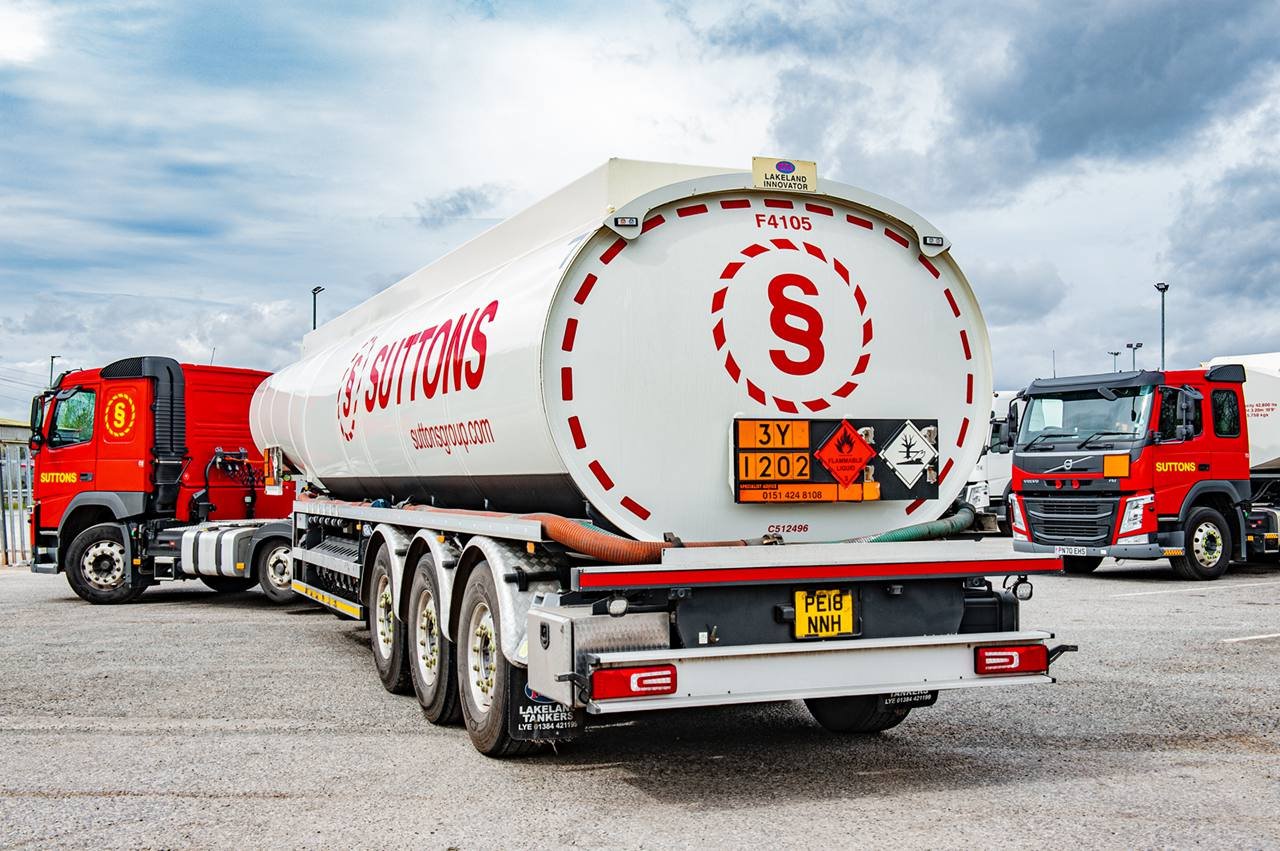
The cylindrical tank sits on top of the truck frame, and the liquid cargo fills the upper portion of the cylinder. This places the weight high above the ground, creating a high center of gravity that makes the truck prone to rollovers on curves, ramps, and during sudden lane changes.
Conclusion
This tanker endorsement practice test covers every concept that appears on the 2026 N endorsement exam. The ten questions above represent the core topics: liquid surge, baffled versus smooth bore tanks, outage, weight distribution, and safe driving procedures.
If you answered at least 8 of 10 correctly, you are in strong shape for the real test. If you struggled with surge questions or mixed up baffles and bulkheads, review our Tanker Study Guide for detailed explanations of every concept.
The tanker endorsement is the fastest upgrade you can add to your CDL. Twenty questions, no driving test, no TSA check, no ELDT course. Walk in, pass the exam, and add thousands of dollars to your annual salary.
For more practice, try our Free CDL Practice Test for General Knowledge and Air Brakes questions. If you are combining Tanker with HazMat for the X endorsement, check our CDL X Endorsement Guide.
Frequently Asked Questions (FAQ)
How many questions are on the CDL Tanker endorsement test?
The tanker endorsement practice test at the DMV has 20 questions. You need to answer 16 correctly (80%) to pass. The test covers liquid surge, tank construction (baffles, bulkheads, smooth bore), outage, and safe driving procedures.
Is the Tanker endorsement test harder than HazMat?
No. The Tanker test has 20 questions about visual, physical concepts. The HazMat test has 30 questions about complex federal regulations, placarding rules, and shipping paper requirements. Most drivers pass the Tanker test on the first attempt with minimal study.
Do I need ELDT training for the Tanker endorsement?
No. The ELDT theory requirement only applies to the HazMat endorsement and to first-time Class A and Class B CDL applicants. The Tanker (N) endorsement requires only the 20-question knowledge test at the DMV.
Can I take the Tanker endorsement test without a CDL?
You can take the knowledge test when you apply for your Commercial Learner’s Permit (CLP). The N endorsement will be added to your CLP and carry over to your full CDL after you pass the skills test.
What does the N endorsement allow me to haul?
The N endorsement allows you to operate any tank vehicle with a rated capacity of 1,000 gallons or more. This includes non-hazardous liquids like milk, water, and juice. To haul hazardous materials in a tank vehicle, you also need the H endorsement, which combines into the X endorsement.
How much does the Tanker endorsement cost?
The DMV testing fee is typically $10 to $25. There is no TSA background check required. If you are adding the endorsement to an existing CDL, you may pay a license reprint fee of $10 to $30. Total cost is usually under $50.