
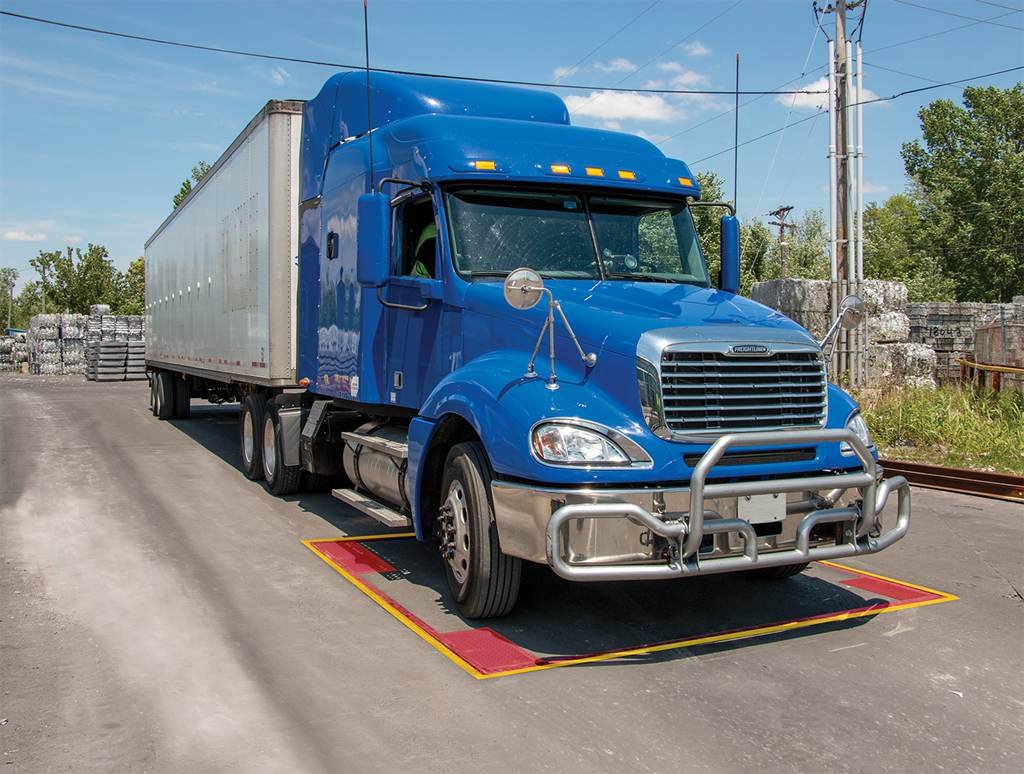
The number 26,001 pounds does not answer the question by itself. To determine whether weight requires a CDL, compare the vehicle’s rating and actual weight, then check the combined rating or weight and the towed unit. Passenger capacity and placarded hazardous materials can require a CDL even below the weight threshold.
This guide gives you the fast answer first, then explains GVWR, GCWR, axle limits, the 80,000-pound federal gross limit, the Bridge Formula, and how drivers use a scale ticket to stay legal.
Start with the certification labels on the power unit and trailer—not curb weight, payload capacity or a salesperson’s description. The federal Group A and B definitions use the greater of the relevant rating or actual weight.
60-Second CDL Weight Check
- Write down the power unit’s GVWR and its current gross vehicle weight.
- If towing, write down the combination’s GCWR/GCW and the towed unit’s GVWR/GVW.
- If the combination reaches 26,001 pounds and the towed unit exceeds 10,000 pounds, check the Class A row below.
- If a single vehicle reaches 26,001 pounds, check the Class B row.
- Even below those thresholds, check passenger design capacity and placarded HazMat use for Class C.
- Confirm the result with your State Driver Licensing Agency before operating the vehicle.
Quick Answer: When Does Weight Require a CDL?
| Vehicle Setup | CDL Usually Required? | Why |
|---|---|---|
| Single vehicle rated 26,001 lbs or more | Class B CDL | Heavy straight truck, dump truck, box truck, or bus |
| Combination rated 26,001 lbs or more with trailer over 10,000 lbs | Class A CDL | Tractor-trailer, many hotshot setups, heavy truck and trailer combinations |
| Vehicle under 26,001 lbs carrying placarded HazMat | Class C CDL with HazMat | HazMat rules can trigger CDL even under the weight threshold |
| Vehicle designed for 16+ passengers including driver | Class C CDL with Passenger | Passenger capacity can trigger CDL even under the weight threshold |
| Vehicle rated 26,000 lbs or less with no HazMat/passenger trigger | Usually no CDL | Still may need a non-CDL license or state-specific endorsement |
The key detail: CDL weight is not just what the truck weighs today. DMV and enforcement officers often look at the rating on the vehicle: GVWR for a single vehicle and GCWR for a combination.
Practice the weight rules
Not sure which class applies? Practice CDL general knowledge and combination vehicle questions in the CDL PassMaster app, including GVWR, GCWR, axle weight, and cargo loading scenarios.
Take the Free General Knowledge Diagnostic →The 26,001 Pound CDL Rule
The number most drivers remember is 26,001 lbs. That is the point where a commercial vehicle moves into CDL territory, but the trailer weight decides whether it is Class A or Class B.
| CDL Class | Weight Rule | Common Examples |
|---|---|---|
| Class A CDL | Combination vehicle with GCWR or actual combined weight of 26,001+ lbs, and the trailer is over 10,000 lbs | Semi truck, tractor-trailer, many hotshot truck and trailer setups |
| Class B CDL | Single vehicle with GVWR or actual weight of 26,001+ lbs, or that vehicle towing a trailer of 10,000 lbs or less | Straight truck, dump truck, large box truck, cement mixer |
| Class C CDL | Does not meet Class A or B weight rules, but carries placarded HazMat or enough passengers | HazMat van, shuttle bus, small passenger bus |
Common Weight Scenarios
| Scenario | Likely CDL Result |
|---|---|
| 26,000 lb box truck with no passengers or HazMat | Usually no CDL by weight |
| 26,001 lb box truck | Class B CDL |
| 14,000 lb pickup pulling a 14,000 lb trailer | Often Class A CDL because the combination is 28,000 lbs and trailer is over 10,000 lbs |
| 25,999 lb truck pulling a 9,000 lb trailer | Usually no CDL by weight, unless HazMat/passenger rules apply |
| Tractor rated 52,000 lbs pulling a 53-foot trailer | Class A CDL |
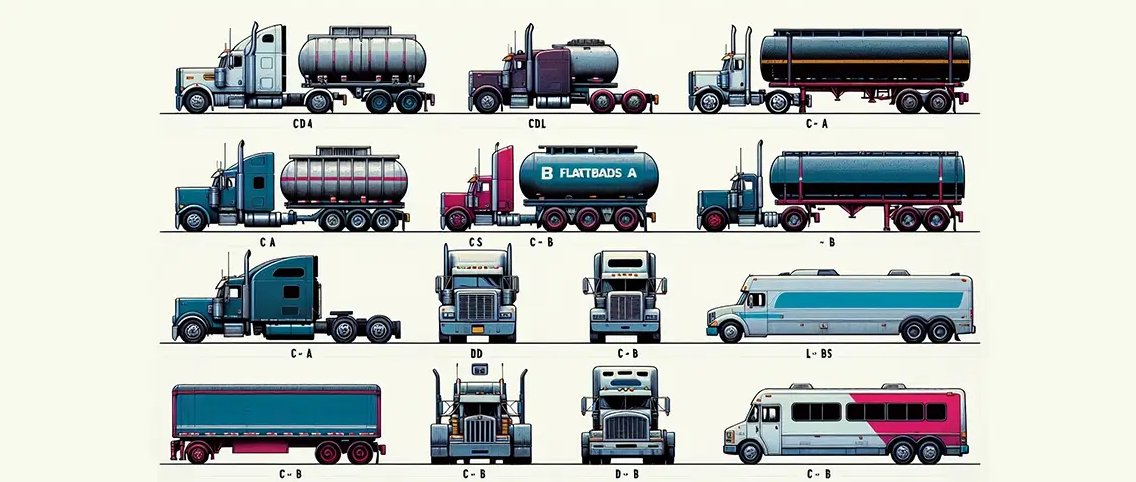
If the truck is close to the line, check the door jamb, registration, trailer data plate, and state DMV rules. Do not rely on the empty weight of the truck.
Class A and Class B CDL Weight Limits
Many Bing searches on this topic are really asking about cdl class weight limits, maximum weight for cdl class b, or what weight limit do you have to have a cdla. Here is the short version:
| License Type | Weight Limit Rule | What That Usually Means |
|---|---|---|
| Class A CDL | 26,001+ lbs combined, with trailer over 10,000 lbs | Combination vehicles such as semis and many heavy pickup-and-trailer setups |
| Class B CDL | Single vehicle 26,001+ lbs, or that vehicle towing 10,000 lbs or less | Straight trucks, large box trucks, dump trucks, buses |
| Class C CDL | Below Class A/B weight limits, but passenger or HazMat rules apply | Smaller passenger vehicles or placarded HazMat vehicles |
If you are wondering what GVWR requires a CDL, the usual answer is 26,001 lbs GVWR for a single vehicle. If you are wondering about a combination, check the GCWR and then check whether the trailer is over 10,000 lbs.
That is also why a truck with 26,000 GVWR and a trailer with 10,000 GVWR often stays outside CDL territory by weight, while a similar setup with a trailer rated at 10,001 lbs can move into Class A territory.
GVWR vs GCWR vs Actual Weight
Understanding CDL weight requirements starts with three terms.
GVWR (Gross Vehicle Weight Rating) is the manufacturer’s maximum rated weight for one vehicle. You usually find it on the door jamb, data plate, registration, or trailer VIN plate.
GCWR (Gross Combination Weight Rating) is the maximum rated weight of a power unit and trailer together. For CDL class decisions, this matters most when the trailer is rated over 10,000 lbs.
Actual gross weight is what the vehicle really weighs on a scale today. You can be under the CDL rating threshold when empty but over it when loaded. You can also be under 80,000 lbs gross and still illegal on an axle group.
That last point is why professional drivers scale their loads. Legal weight is not only total weight; it is also how that weight is distributed.
GCWR vs GVWR: Which One Matters More?
Searches like gcwr vs gvwr and gcvwr meaning truck are common because drivers see both numbers on paperwork and are not sure which one controls the license class.
Use GVWR when you are judging one vehicle by itself. Use GCWR when you are judging a truck and trailer combination together. If the combination rating reaches 26,001 lbs and the trailer is over 10,000 lbs, that usually points to Class A CDL.
For enforcement and registration questions, the state may look at the rating, the actual loaded weight, or both. When in doubt, treat the higher-risk number as the one that matters.
Federal Truck Weight Limits: 80,000 / 20,000 / 34,000
For standard interstate trucking, the core federal weight limits are:
| Limit | Number to Remember | What It Means |
|---|---|---|
| Gross vehicle weight | 80,000 lbs | Maximum total weight without an overweight permit |
| Single axle | 20,000 lbs | Maximum for one axle on the Interstate system |
| Tandem axle group | 34,000 lbs | Maximum for a qualifying two-axle tandem group |
| Common steer axle target | About 12,000 lbs | Often limited by tire rating and carrier policy |
For a standard 5-axle tractor-trailer, a classic legal scale ticket might look like this:
| Axle Group | Target Limit |
|---|---|
| Steer axle | 12,000 lbs |
| Drive tandems | 34,000 lbs |
| Trailer tandems | 34,000 lbs |
| Gross | 80,000 lbs |
In real life, you want a cushion. A ticket like 11,800 / 33,200 / 33,500 / 78,500 is easier to live with than one sitting exactly at every limit.
Steer, Drive, and Tandem Axle Weight Limits
The Bing keyword table shows real interest in dot weight on rear drives, drive axle weight limit, steer weight limit, tandem axle weight limits, and what is a truck axle weight limit. Those searches are usually about operating legality, not license class.
Use these quick rules:
| Axle Group | Common Legal Target | Why Drivers Watch It Closely |
|---|---|---|
| Steer axle | About 12,000 lbs in practice | Tire ratings and carrier policy often cap it below the single-axle federal maximum |
| Drive axle tandem | 34,000 lbs | Rear drives are where overweight tickets commonly happen after loading |
| Trailer tandem | 34,000 lbs | Sliding tandems changes how much weight this group carries |
| Single axle | 20,000 lbs | Applies when the axle is not part of a qualifying tandem group |
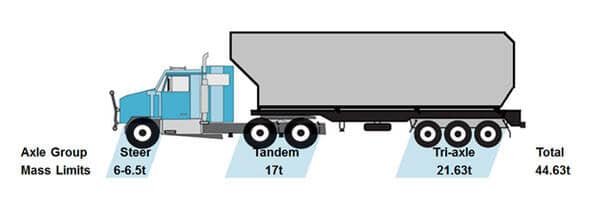
If you are searching dot weight on rear drives, the practical answer is that the drive axle tandem limit is usually 34,000 lbs on the Interstate system. If that number is high, sliding trailer tandems forward is often the first fix.
The Federal Bridge Formula, Simplified
The Federal Bridge Formula exists because weight spread over a longer distance is easier on bridges than the same weight concentrated in a short space. It uses axle spacing and axle count to determine how much weight a group of axles may legally carry.
The formula is:
W = 500 [(L x N) / (N - 1) + 12N + 36]
Where:
- W = maximum allowable weight in pounds
- L = distance in feet between the outer axles of a group
- N = number of axles in that group
Most drivers do not solve the formula by hand. They use the Bridge Formula Table in CDL manuals, motor carrier guides, or enforcement references.
The 36-Foot Inner Bridge Rule
To carry the full 68,000 lbs on the drive and trailer tandem groups together, the distance between those tandem groups usually needs to be at least 36 feet. If you slide the trailer tandems too far forward, you may fix one axle problem but create a bridge law problem.
That is why weight and length rules work together. A load can be under 80,000 lbs gross and still be illegal because the axle spacing is wrong.
Drivers searching cmv bridge axle length, truck weigh bridge length, or the bridge formula cdl are usually trying to understand that exact tradeoff: legal weight depends on both the pounds on the axles and the distance between them.
How to Scale Out a Load
Suppose your scale ticket says:
| Axle Group | Weight |
|---|---|
| Steers | 11,800 lbs |
| Drives | 36,500 lbs |
| Trailer | 31,000 lbs |
| Gross | 79,300 lbs |
The truck is under 80,000 lbs gross, but the drives are 2,500 lbs overweight. You need to move weight from the drive axles to the trailer axles.
Sliding Trailer Tandems
Use this rule of thumb:
Slide trailer tandems forward to put more weight on the trailer axles.
Slide trailer tandems backward to put more weight on the drive axles.
One trailer hole often moves about 250 to 500 lbs, depending on the trailer and load. In the example above, you might slide forward 5 or 6 holes, then re-weigh.
Sliding the Fifth Wheel
The fifth wheel moves weight between the steer axle and drive axles:
- Slide fifth wheel forward: adds weight to steers, removes some from drives.
- Slide fifth wheel backward: removes weight from steers, adds weight to drives.
Many company drivers do not adjust the fifth wheel unless authorized by their carrier, so trailer tandem adjustment is the more common fix.
Kingpin to Rear Axle Laws
Some states limit how far back your trailer tandems can sit. This is often called kingpin to rear axle or KPRA.
California is the rule drivers talk about most: the center of the rear axle is generally limited to 40 feet from the kingpin on many trailers. Florida and Connecticut also have trailer length and axle placement rules that can affect tandem position.
The trap is simple: sliding tandems back can help weight distribution, but it may make the trailer illegal for a state with a shorter KPRA limit. If you cannot satisfy weight and length rules at the same time, the load may need to be reworked by the shipper.
KPRA Limits and Why They Matter
The keyword kpra limits is valuable because it matches a real operational problem. A driver can fix axle weight, pass the scale, and still be illegal once the trailer enters a state with stricter kingpin-to-rear-axle rules.
That is why tandem position should never be adjusted by weight alone. On multi-state freight, always think about both bridge axle length and KPRA limits before assuming the load is legal.
Overweight Fines and Penalties
Overweight fines vary by state and by how far over the limit you are. A minor axle overage may cost a few hundred dollars. A major overage can cost thousands, put the vehicle out of service, and add CSA points to the carrier’s record.
Company policy matters too. Many carriers expect the driver to pay a weight fine if the driver left the shipper without scaling the load.
The practical rule is easy: a scale ticket is cheap compared with an overweight citation. Scale heavy loads before you get too far from the shipper.
Weight Rules on the CDL Written Test
The CDL written test usually covers weight in two places:
| Test Area | What to Study |
|---|---|
| General Knowledge | GVWR, GCWR, cargo weight, stopping distance, load securement |
| Combination Vehicles | Bridge Formula basics, axle spacing, sliding tandems, trailer weight transfer |
For practice, use our CDL General Knowledge Practice Test and CDL Combination Vehicles Practice Test. If you are still choosing a license class, read What Is a Class A CDL? and Class A vs Class B CDL.
Conclusion
The key CDL weight requirements are easy to remember once you separate license class from legal operating weight. For license class, start with 26,001 lbs and the 10,000 lb trailer rule. For legal road weight, remember 80,000 lbs gross, 20,000 lbs single axle, and 34,000 lbs tandem axle.
If you are close to any limit, check the rating plate, scale the load, and fix the weight before leaving the shipper.
Official Sources
- FMCSA National CDL Program Glossary and vehicle-group definitions
- FMCSA commercial motor vehicle groups
- FMCSA guidance: combination below 26,001 pounds with trailer over 10,000 pounds
- FHWA federal size and weight guidance
Frequently Asked Questions (FAQ)
What weight requires a CDL?
A CDL is generally required when a single commercial vehicle is rated or loaded at 26,001 lbs or more, or when a combination is rated or loaded at 26,001 lbs or more and the trailer is over 10,000 lbs.
Do I need a CDL for a 26,000 pound truck?
Usually no, as long as the vehicle is rated at 26,000 lbs or less and does not require HazMat or passenger endorsements. The CDL weight threshold starts at 26,001 lbs.
Is CDL weight based on GVWR or actual weight?
Both can matter. CDL class is commonly based on GVWR or GCWR, but actual gross weight can also trigger requirements if the vehicle is loaded over the threshold.
What GVWR requires a CDL?
A single vehicle usually requires a CDL when the GVWR is 26,001 lbs or more. For combinations, check the GCWR and whether the trailer is over 10,000 lbs.
What is the max weight for a tandem axle?
On the Interstate system, a qualifying tandem axle group is limited to 34,000 lbs. A single axle is limited to 20,000 lbs.
What are Class B CDL weight restrictions?
A Class B CDL usually covers a single vehicle with a GVWR of 26,001 lbs or more, or that vehicle towing a trailer of 10,000 lbs or less. If the trailer is over 10,000 lbs and the combination crosses the CDL threshold, it usually falls under Class A.
What is the Federal Bridge Formula?
The Federal Bridge Formula calculates legal axle group weight based on axle count and spacing. The simple takeaway is: more spacing between axles generally allows more legal weight.
How do I fix an overweight drive axle?
If the drives are overweight and the trailer axles are underweight, slide the trailer tandems forward to move weight from the drives to the trailer. Then re-scale to confirm the fix.